Home lift / Technology

Home lift: five technologies, one comparison

Every manufacturer will tell you their drive system is the right one. We supply all common technologies, so we can compare them without a predetermined outcome.

ParameterPlatformScrew-drivenHydraulicRope-drivenVacuum
Shaftlight enclosure or self-supportingself-supporting, included in the supplyself-supporting or masonrymasonry or steelown transparent tube
Machine roomnono, drive in the shaftpower unit cabinet nearbyno, machine in the head of the shaftturbine at the top of the tube
Pit depthno, rampno or several cmusually several cmyesno
Speedup to 0.15 m/sup to 0.15 m/s0.15 to 0.6 m/s0.6 m/s and morearound 0.15 m/s
Load capacity250 to 400 kg300 to 500 kg300 to 630 kg320 to 1000 kg1 to 3 persons
Noisequietaudible operationvery quietquietnoisier during operation
Power consumptionlow, 230 V socketlow, 230 V sockethigher when travelling upwards, almost zero downwardslow per kg, needs a dedicated circuit breakerhigher, turbine
Travel heightup to approx. 3 m (2 stations), inclined along stairsup to approx. 13 m, 2 to 5 stationsup to approx. 15 mno limitations for detached housesup to approx. 13 m, 2 to 4 stops
Suitable foraccessibility, two floors, budgetretrofitted into the house, minimum demolitioncomfort, load capacity, quiet operationNew build with lift included in the project plandesign feature, limited space

The figures are indicative ranges across manufacturers; specific models may vary. The decisive factors are always the intended use and who will be using the lift.

Screw drive lift

The cabin travels along a steel screw driven by a motor in the shaft. The self-supporting shaft is included in the supply; it stands on the floor, requires no pit and only needs a socket. This is the most common choice for retrofitting into an occupied house. Weakness: slower speed, audible operation.

Hydraulic lift

The cabin is raised by a piston driven by an oil-powered unit housed in a small cabinet nearby. The ride is smooth and quiet with higher load capacity. It typically requires a shallow pit and space for the unit. A good choice when comfort matters and there is room for the cabinet in the house.
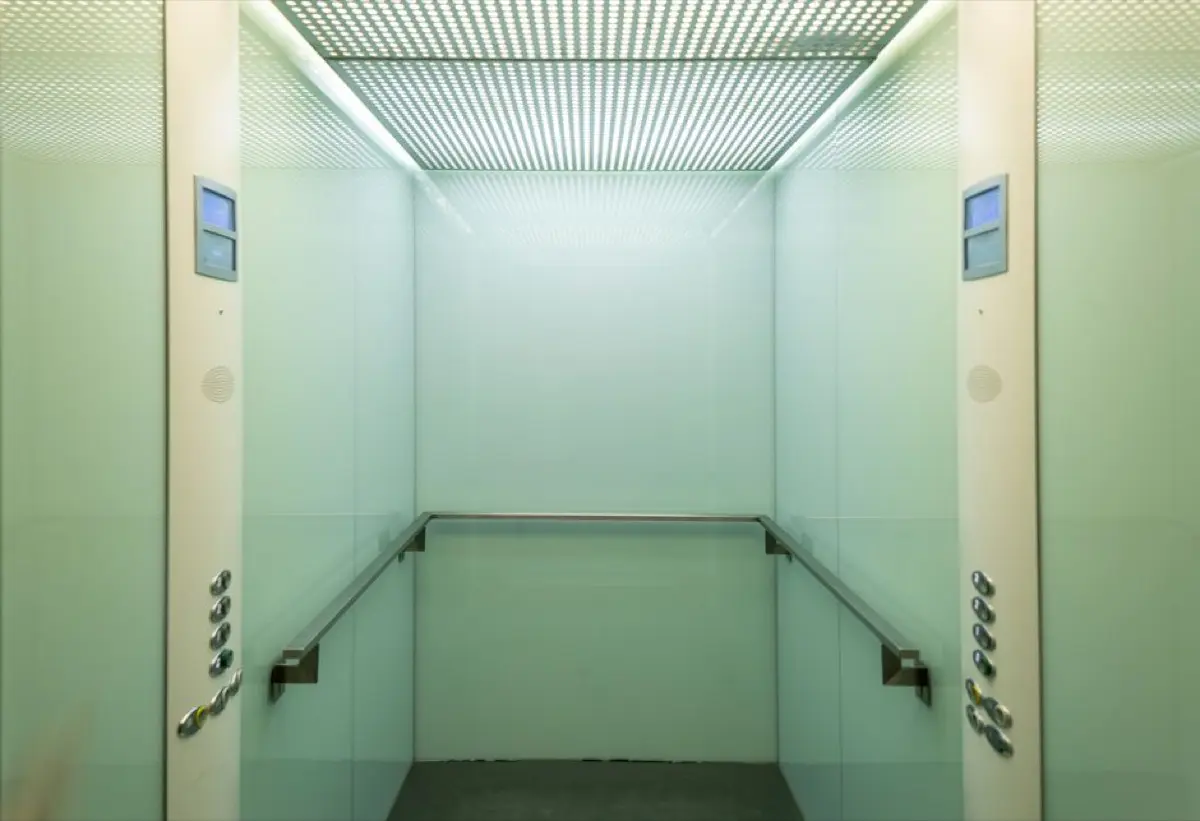
Interior of the stainless steel home lift cabin with mirror and handrail

Rope lift

A classic from apartment blocks in miniature: a cabin on ropes with a gearless machine in the shaft head. Fast, quiet, and practically unlimited lift height. However, it requires a masonry or steel shaft with a pit and an overhead clearance, so it is suitable for new builds or major renovations.

Vacuum lift

Transparent tube in which the cabin is lifted by vacuum created by a turbine at the top. It stands on the floor; installation is quick and the appearance is distinctive. The cabin is smaller (one to three persons, trolley for larger models) and the turbine is audible during travel.

Platform

A vertical platform lifts a person in a wheelchair or with a walking frame between two levels without a full cabin. An inclined platform runs on a rail alongside the staircase, keeping the stairs passable. Both are cheaper than a lift, slower and primarily intended for accessibility. More details on the page for seniors and barrier-free access.

Questions about technologies

How does a platform lift differ from an elevator?

Primarily speed and the cabin. The platform travels at up to 0,15 m/s, typically has lower guarding instead of a full cabin and is assessed as machinery (standard ČSN EN 81-41). A lift has a cabin with doors, can travel faster and falls under the Lift Directive. For two floors and a wheelchair, a platform is often the most sensible choice; for four floors and daily family use, a lift is more suitable.

Which home lift is the quietest?

Hydraulic: the unit can be installed outside living areas and the ride is smooth. Rope lifts with gearless machines are also quiet. Screw drives are audible, while vacuum lifts are the noisiest during operation due to the turbine.

What if the power fails?

Home lifts feature an emergency descent to the nearest floor via a backup battery, hydraulic emergency lowering or a manual mechanism. Doors can be opened from inside. The specific solution depends on the technology and is included in the documentation.

Not sure which technology to choose? We'll come and take a look.

During the survey, the technician will propose two to three variants for your house and explain the differences on site. Free of charge and without obligation.

Prefer a phone call? We answer on working days.

775 654 443

[email protected]

Other topics